

|
|

Tutorial #3: Digital Photograph to Painting Tutorial
|
Hello there, 123RFians! We've seen quite a number of Photoshop filters that are able turn a photo into a painting with just a few quick and dirty clicks and flicks of a mouse. However, these filters don't really give us the control that we at times desire to really tweak the photograph and really turn it into 'a work of art' so to speak.
Therefore, in this tutorial, I'm going to introduce to you some techniques and tricks you can use to quickly give your photo painting-like feel to it. We'll even complete it with canvas like texturing and frame to boot!
Very quickly, here's the original photograph on the left and the touched up, altered result on the right.
|
|
|
| Before |
After |
|
|
Now that we know what to aim for, let's start the tutorial good and proper. First off, if you've been following my tutorials thus far, you'll notice that we always try to retain the original background layer of the photograph so that we always have the original to fall back on just in case we did something which we did not intend.
In this tutorial there are two strategies that we're going to use. First, we'll create a layer that serves as the pencil "outline" layer, then, we're going to mask the new layer so that it looks a lot softer, like a water color. Secondly, we'll then apply a frame and add texture to the painting to give it a realistic look and feel.
|
- First, duplicate the background layer by pressing COMMAND/CTRL+J.
- Use an Unsharp Mask filter to sharpen the new layer, Filter > Sharpen > Unsharp Mask
- I found these settings to be quite useful for our application.
- Amount= 200,
- Radius= 15,
- Threshold= 20

- On the sharpened layer, apply a Find Edges filter by going to the menu bar and selecting Filter > Stylize > Find Edges
- The screenshot below shows the effect of the applied filter.

- Now let's desaturate the layer: COMMAND + SHIFT + U / CTRL + SHIFT + U to desaturate the layer. Desaturation has the effect of removing all remnants of colour from the layer.

- Now we're going to add a Curve adjustment layer (Layer > New Adjustment Layer > Curve) to reduce the darkness of the lines in order to make it look similar to pencil strokes for the outline of the lotus.

- Next, we'll do some coloring. Select both the adjustment layer and layer 1, and press COMMAND/CTRL+E to merge them together. Double click the layer name to rename it. Let's rename it as "outlines". Press ENTER to confirm the name.

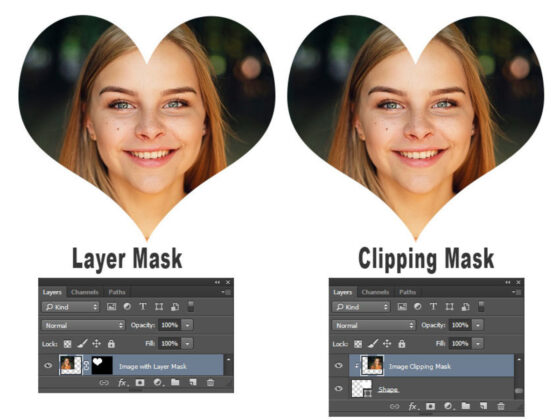
- Make sure the "outline" layer is selected then click the "Add Layer Mask" button on the Layer pallet. Alternatively, via the menu bar, you may go to Layer > Layer Mask > Reveal All to add a layer mask on the "outlines" layer.

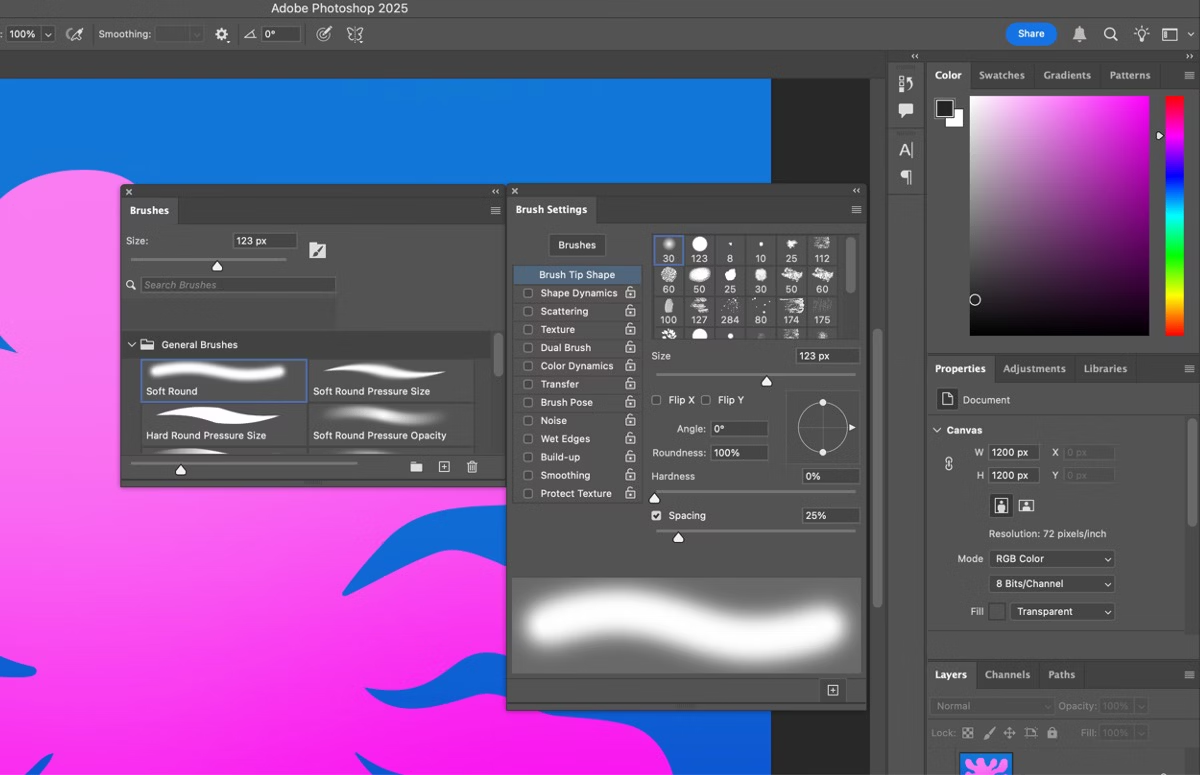
- Now let's start coloring. Remember to use a soft round brush, select the black color and start coloring on the layer mask.
- You will notice that once you color the black in, parts of the image will become more apparent.
- You may also alter the brush's opacity and hardness to achieve a suitable result.

- As you can see the painting looks pretty convincing now.
- Let's add a frame to the painting and top it off with applying a canvas like texture to give it a more realistic look and feel.
- First let's start with the frame, create a new layer (COMMAND/CTRL+SHIFT+N), and fill it with white.
- Use the Rectangular Marquee Tool and then click and drag to create a box selection in the middle.
- Then, hold OPTION/ALT key and click Add Layer Mask to mask the white layer.

- Hold down COMMAND/CTRL and click on the newly created layer mask to make a selection boundary from it.
- Invert the selection by pressing the COMMAND/CTRL+SHIFT+I keys together.
- Go to the Path window and click the little triangle on the top right and you'll see the path option, click Make Work Path...
- We want to create an accurate a work path as possible so we'll set the Tolerance to 0.5, (the tightest tolerance setting possible) and click OK to accept the settings.

- After you have your Work Path, create a new layer by pressing COMMAND/CTRL+SHIFT+N and then Enter.
- Double click on the newly created layer and rename it to "box".
- Select your Work Path in the Path window, click the little triangle again and choose Stroke Path.
- Stroke the path with Pencil Tool, but make sure you set your pencil brush to hard round 4 pixels and opacity to 100%.
- This will add a thin outlined box that serves to frame up your "painting".

- The frame seems a bit too obvious, so let's Lower the "box" layer's opacity to 50%.
- Now let's go back to Layer 1, click its layer mask, use a soft round brush to reveal more of the masking which will in turn reveal more of the original photo.

- Now the painting is almost done, yet the final touch isn't applied. Select the "box" layer, press COMMAND/CTRL+A to select the whole artwork, press COMMAND/CTRL+SHIFT+C, to copy merged all layers, and COMMAND/CTRL+V to paste on top.
- On the new layer, apply the Texturizer Filter via the menu bar by clicking Filter > Texture > Texturizer. We'll use the Canvas type for texture with Scaling 100%, and 2 for Relief.

 Texturizer setting
- Click OK and voila! Our work of art is born!

|
| In this tutorial, we have learnt to create a painting from a digital photograph using techniques such as masking and filters such as finding edges and the texturizer to create some realistic canvas like textures. With this technique the painting we created looks surreal and soft. If you find the edges of the outline a little too distracting, you can always lower its opacity, but it does look quite well done here if I may say so myself! |
Happy "painting"! |
|
|
More Master It! Tutorials
Hear It! Interviews
|
|
|