|

Creepy Tree Design
Tutorial
Tutorial by Orion Williams
Here's a Deviant Art style tutorial. Make sure to
check out
www.mjranumstock.deviantart.com for some great stock. I've
got special permission from him to use these to teach you guys and
appreciate his quality and generosity.

In this tutorial I'm going to teach you some of the basics in
creating a widely used deviant design effect. In creating
these designs we'll start with 2 images and combine them together.

First we have to get a selection of our subject. I'm going
to the magic wand tool.

Getting selections are an important part of mastering Photoshop
and creating quality graphic design. Quality, accurate
selections are essential for professional work. Here I'm going
to the 'add to selection' option so I can click the magic wand more
than once.

With these studio shots, it's often easier to get a selection
than in other cases. What we want to do is select the simpler
background.

You can change your tolerance to affect the selection you're
getting. By raising the tolerance and clicking on the
background, wherever the sample point was, the more pixels will be
selected that are further in tonal range from that original
selection point.

Some people don't like using the magic wand tool. I like
using it in certain cases because I know how to modify the selection
and combine different methods. Often just by changing the
tolerance you can get most of the selection done that you want
depending on the image.

I teach you selections and selection modification in the
TutorialKey training. You'll get a better idea of how I work
on the video tutorials where I get selections recorded live.

I'll usually go to the Lasso tool to further modify a selection.

Using the 'add to' or 'subtract from' selection options are
crucial for mastery.

Since we're selecting the background which was simpler, I'm
selecting the inverse after right clicking.

This will get our main subject selected.

Now go to the moVe tool and click within the selection to drag
it.

Drag it into the other image.

In designing you want to look at your elements and decide what
would potentially 'work together' for the overall design.
Having this model sitting in the grass would work better than say a
futuristic warrior. I press Ctrl T to get the transform
option.

You can scale by holding down shift and dragging on one of the
corner options.

Usually I'll just start designing on an actual image itself.
If you're doing a specific job then you'll have to get your Image
Size and resolution set beforehand but for this purpose I'm just
teaching you like this here. If I'm going to alter any pixels
on a layer I'll almost always duplicate the layer.

I dragged/drug? the background layer to the new layer icon to
duplicate it and now I'm starting to get a selection with the magic
wand tool. Since the sky is very light I'm going to start
selecting that first.

To help get an expanded selection of similar pixels, you can
right click and choose Similar.

Done properly, this will really help you get a selection.

Modifying your tolerance with the magic wand tool can also help.
This is best seen in my live video tutorials to get a better grasp
on the concept.

What I'm doing is selecting the sky and then going to 'cut' it
from the layer itself to leave the tree.

To cut the sky and put it on it's own layer you can go to Layer:
New: Layer via Cut.

Or you can just Ctrl X or Edit: Cut to get rid of it since we
have a backup layer. I like having backup options sometimes
though. Now I'm just hiding that cut sky layer.

Now I'm going back to the landscape layer by clicking it in the
layers palette making it active.

It's always a good idea to save your work especially if you have
PC I mean computer instability.

Another important part of many Deviant style designs is having a
daunting epic sky.

If you've got a Photos.com collection you'll have many great
options to choose from in creating your designs.

Since I just want the sky here I'm 'borrowing' or 'taking' it
from this picture with the marquee selection tool.

Go to moVe tool, click within the selection and drag it into your
design document.

Now we'll have to place and position it more properly.

I'm putting it in the corner.

Go to Free Transform. With mjranum stock you can make this
exact similar design.

Now we can modify the sky layer to make it fit even if we stretch
it.

Since it is appearing above the background layer, we will move it
below the sky layer as such.

Now you can see the layer order where we 'fit' the sky behind the
now foreground layer.

Now that we've added a different sky we'll want to integrate it
more into the design. Right now it is too blue while the rest
is green. You can start to adjust it with a Color Balance
adjustment layer from the layer palette icons.

I'm just going to do the color balance on this layer itself.
These settings don't have to be exact..just eyeball them
yourself..here I'm creating more of a green balance so I'll adjust
the sliders.

Here you can see the adjustment on the layer. I'll usually
work in all 3 tonal balance areas; shadows, midtones and highlights.

Now let's do a global adjustment layer to affect the whole image.
To do so, make active your top layer in the layers palette.

Now you can choose different adjustment layers from our pop-up
menu. Here I'm choosing the (new in CS3) Black & White
adjustment layer.

..and choosing the High Contrast Blue Filter Preset (because I
used it before very nice once).

And then we'll want to change the blend mode so that the
adjustments mixes light with everything beneath it. Multiply
will give a darker mix.

I often like adding what I call 'custom adjustment layers'.
To make these just Ctrl click on the image of the layer icon itself
as such.

Then you can add an adjustment layer which will apply just to
this layer. Here I'm adding Hue/Saturation to our main
actress.

I like to add a desaturation quite often and change the blend
mode.

Here I'm making the saturation adjustment layer to Soft Light.

We can make the Black & White adjustment layer to a different
blend mode to see how it mixes.

Using adjustment layers and making adjustments are part of great
professional technique in Photoshop. Professionals use
adjustments all of the time. Here I'm bringing up the contrast
with a Curves adjustment by bringing up the lighter areas and
darkening the dark areas.

You can go back to your original sky layers and change those
blend modes as well. The duplicate sky can mix light with the
original sky while meanwhile all of our other adjustments are still
applying to the entire image.

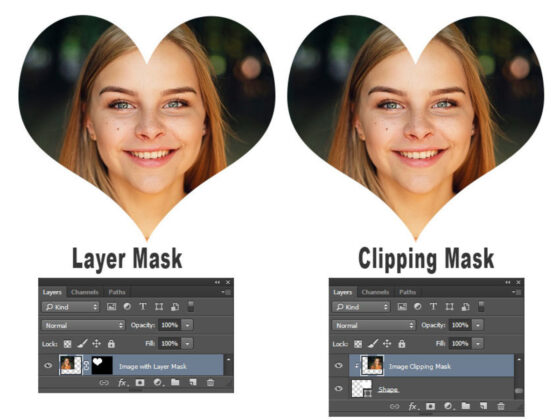
An important concept to understand is brushmasking. Here
I'm adding a layer mask to our duplicate sky layer which is on
linear burn. Because we have a darker version on top, we can
essentially 'hide' portions of the dark layer to let the lighter
layer appear.

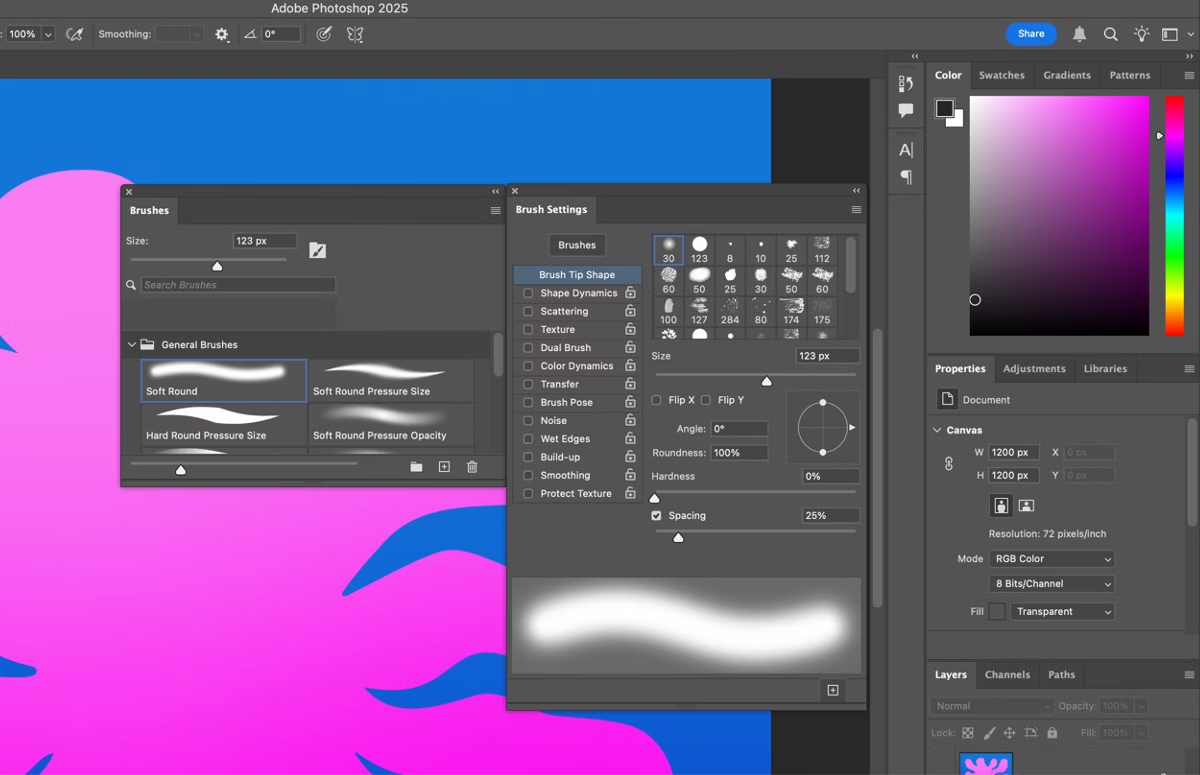
To brush mask go to the brush tool.

And then choose ideally a good grungy brush. Regular round
brushes don't usually get the intended effect at all.

Here I'm grabbing a grungy brush that is close to the shape of a
cloud already.

To mask effectively, make sure that black is your foreground
color. I like to lower the opacity instead of switching to
greys.

Right now I have the Opacity on 65% so that it doesn't fully hide
but still masks most of wherever we brushmask.

So now I'm just taking the brush and masking areas toward the
center. This will let the lighter version of the layer beneath
come through in certain places. Using a brush you can randomly
let light through by brushmasking.

To add brush effects, make sure to create a new layer {by
clicking on the new layer icon} to retain the independence of
whatever effect you do, otherwise it may permanently be on a pixel
layer.

Having a great brush collection is essential for fully maximizing
your designer potential. I'm choosing a cosmicblitz brush from
my renderosity (bought) collection.

When you brush on the new layer it will use whatever is the
foreground color.

We can change the blend mode to change how it appears.

Bringing the layer beneath the other adjustments will affect that
light as well. You can see it makes it much more a part of the
design.

We can scale this brush layer with Ctrl T and hold Ctrl on one of
the corners to skew it as if it was part of the depth of field
foreground.

We can further adjust an actual-pixel layer itself as well.
In this case I'll duplicate the subject layer.

Here..

Then I can then bring up Levels and make an adjustment to make it
lighter or darker.

I've made this layer darker and then I will add a layer mask so
we can 'hide' some of the darker pixels to let the original shine
through.

We're just using the important brushmasking technique on the main
subject layer. This will allow us to create special darken or
highlights. You can use a brush with black as the foreground
color to hide areas of this top layer to let the lower layer shine
through.


And there you go..several of the important processes in creating
a deviant art style design. You can see how layer adjustments
are used and how important they are in the overall design process.
Understanding how to use these processes will really help you get
great design results!
|
Orion
Williams has produced Photoshop tutorials online for
100,000's of Photoshop users worldwide since 2004.
Copyright Dreamcore Productions,
Ltd. U.S.A. 2007
Want to
get instant digital access to over 3 hours of online
Photoshop design VIDEO tutorials and valuable Photoshop
downloads for free*? Just
click the link below to find out more. Serious graphic
designers and Photoshop enthusiasts are most welcome.
Join our exclusive community:
Photoshop CS3 Design
Video Tutorials |
Copyright DreamCore Productions Ltd.
U.S.A. 2007
3000 Sage Road Suite
1265
Houston, TX
77056 U.S.A.
PSDMonthly.com & TutorialKey Solutions
are trademarks of Dreamcore Productions, Ltd. USA 2007
Adobe, Photoshop, and the Adobe
Certified Expert logos are either registered trademarks
or trademarks of Adobe Systems, Inc. in the U.S. & other
countries.
Adobe Product Screen Shots
reprinted with permission from Adobe Systems,
Incorporated.
*Free with 2 week free trial.
Cancel at anytime; further details on sign-up page.
|