

More Photoshop Retouching Tutorials
Dodging & Burning / Eyeshadow
In Photoshop CS there is a new tool called the Color replacement tool. You can find it under the Healing brush or Patch tool.
Here I’m sampling some of the white of the eye to see if it will help replace some of the red eye. This is another use for the color replacement tool.
Now create a custom adjustment layer by going to the Levels
adjustment layer option from the pop up menu on the bottom of the
layers palette. Now just carefully whiten the eyes by dragging the
white slider towards the left. This will brighten only the selected
area. Because we made a selection first you are only applying the
adjustment to the selection which is what’s visible.
The rest of the adjustment layer is masked automatically because you made the selection first so only the eyes are whitened (because you selected them). Making a selection of an area with this method is what I call a custom adjustment layer. If the effect is too strong (remember not to blow it out of proportion), we still want it to look realistic and to see some of the veins faintly, then you can lower the opacity of the adjustment layer.
Now we’re going to do another industry technique. Press Alt and then click on the new layer icon to get the new layer dialog box.
Note that this layer is filled with 50% gray in the layers palette. This dodge and burn layer will allow you to accentuate either highlights or shadows in the image.
Make sure that your brush
(not the layer) has a low opacity such as 3-5% if you’re making
small adjustments or much higher for experimentation.
Go ahead and try it...Grab your soft brush tool and use white as
your foreground color.
Try dodging around the eyes to lighten them.
When you hide the other layers in the layers palette you’ll probably see something like this.
Now try bringing the brushes opacity up to 100% so you can see more of an effect.
Here you can get some really rich, vibrant
highlights or shadows. Most often you’ll not want to do this strong
of an effect but it’s fun to play around with it so let’s do that
for a bit.
Here you can see the 50% gray layer has the strong extremes of black and white which will bring out the much more vivid overlay effect of the colors. You can always switch to soft light too which won’t be as vivid.
If you ever want to reset the layer, the easiest way is to go to Edit: Fill (of course with the layer being selected/highlighted in the layers palette) and then choose 50% gray to get it back to it’s original state (wiping out your work though).
Say that you fool around and get the eyes where you want them to be but not the rest.
Here’s a method that you won’t likely find anyone else teaching you: Copy the layer by dragging it to the new layer icon (to retain an
original), hide the copy and then select the original layer and add
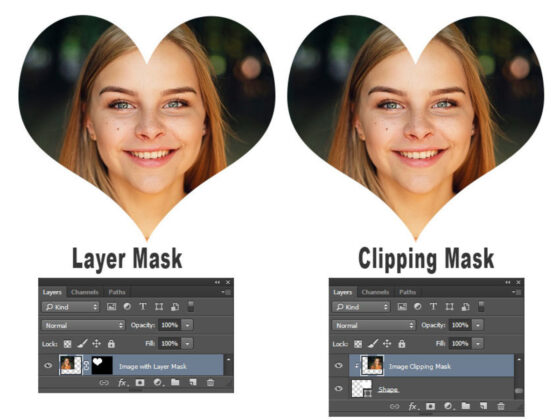
a layer mask as shown. Now you can go ahead and grab a large soft brush (use right ] key
to get larger brush and [ for smaller), get black as your foreground
color and now that you’re on the layer mask (auto after you create
it) go ahead and mask away the rest of the pixels other than the
area you want to keep such as the eyes. I cover layer masking in
depth in my Basic Photoshop training but this is another practical
way in which to use layer masks. It’s better than using the eraser
because you can always come back to or reveal the pixels you masked
or had hidden. Voila, here’s where we’re at for now. You can also browse the Discover Photoshop catalog for Photo Retouching tutorials. |
Copyright Orion Williams & DiscoverPhotoshop.com 2004
Adobe, Photoshop, and the Adobe Certified Expert logos are either registered trademarks or trademarks of Adobe Systems, Inc. in the U.S. & other countries. Adobe Product Screen Shots reprinted with permission from Adobe Systems, Incorporated.
BasicPhotoshop.com, AdvancedPhotoshop.com, PhotoshopDownloads.com, PhotoshopDesigner.com, PSDer, iPSD PhotoshopDesign.Net, ClubCast.tv, Discover Photoshop Network, DiscoverPhotoshop.com, PhotoshopRestoration.com, PhotoshopRetouching, Digital-Scrapbooking.net, Scrapbook-Templates.com, PhotoshopElements.net & FreePhotoshop.NET are trademarks of DreamCore Productions, Ltd. U.S.A. NAPP is a trademark of PhotoshopUser.com. Use of other trademarks or logos does not imply endorsement from the respective sources. Orion Williams became Adobe Certified Expert: Photoshop CS after the development of some of these products or services.
Contact me for questions, praise or tutorial requests. Join the Free Discover PS Network. Read lots of testimonials.